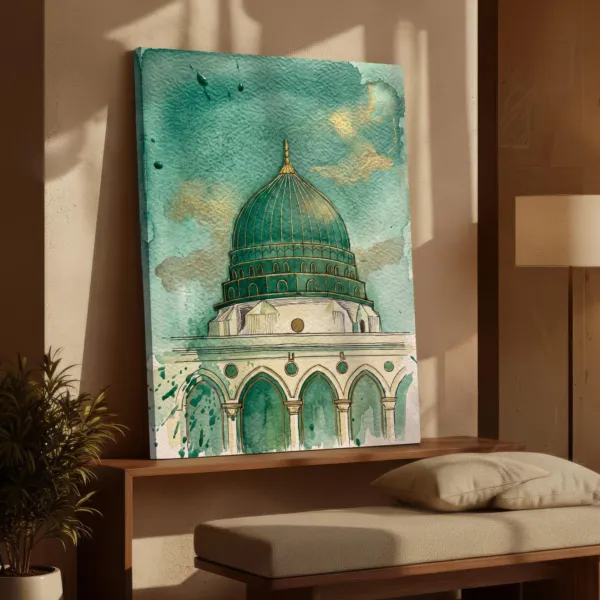
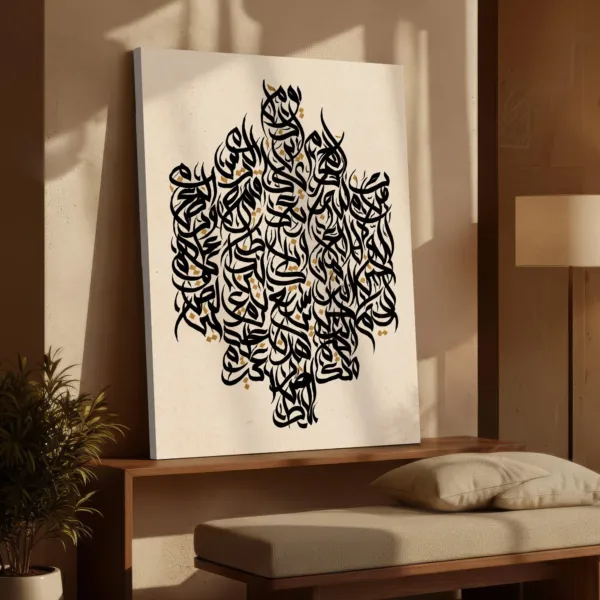
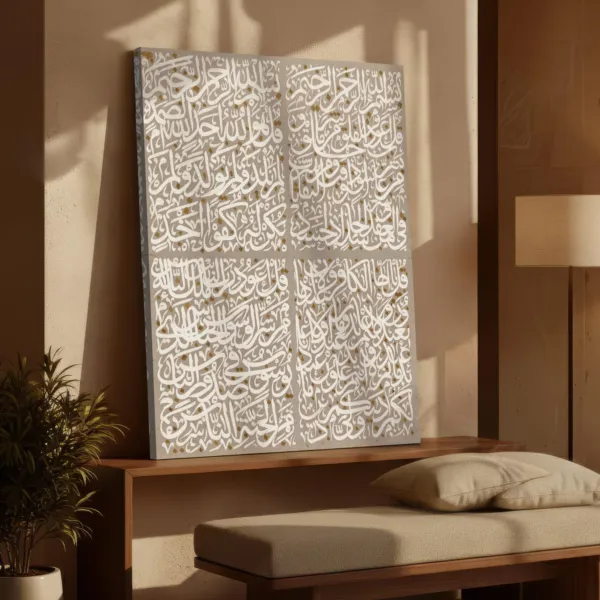
Quick answer: the best Ramadan decorations make the home feel calm and remind everyone what the month is for. Start with warm light (string lights and lanterns), add one meaningful focal point such as a Quran verse on the wall, set up a small prayer and reading corner, and finish with a simple iftar table. Ramadan 2027 is expected to begin on February 7 or 8, so plan to decorate in the last week of January.
Ramadan decorations have become a tradition in many Muslim homes in the US, especially for families with children. The goal is not to copy a holiday store display. It is to make the house feel different for thirty days: softer light in the evenings, reminders of the Quran where everyone can see them, and a table that brings the family together at iftar.
Below are 15 ideas, grouped by where they go in the home. Mix a few seasonal pieces with one or two that stay up all year.
When does Ramadan 2027 start?
Ramadan 2027 (1448 AH) is expected to begin on Monday, February 8, 2027, with some communities starting on Sunday, February 7, depending on the moon sighting. Eid al-Fitr is expected on March 9 or 10, 2027. Most families decorate during the last week of Sha’ban, so aim to have everything up by the weekend of January 30 to 31.
Living room Ramadan decor ideas
1. Make one wall the focal point
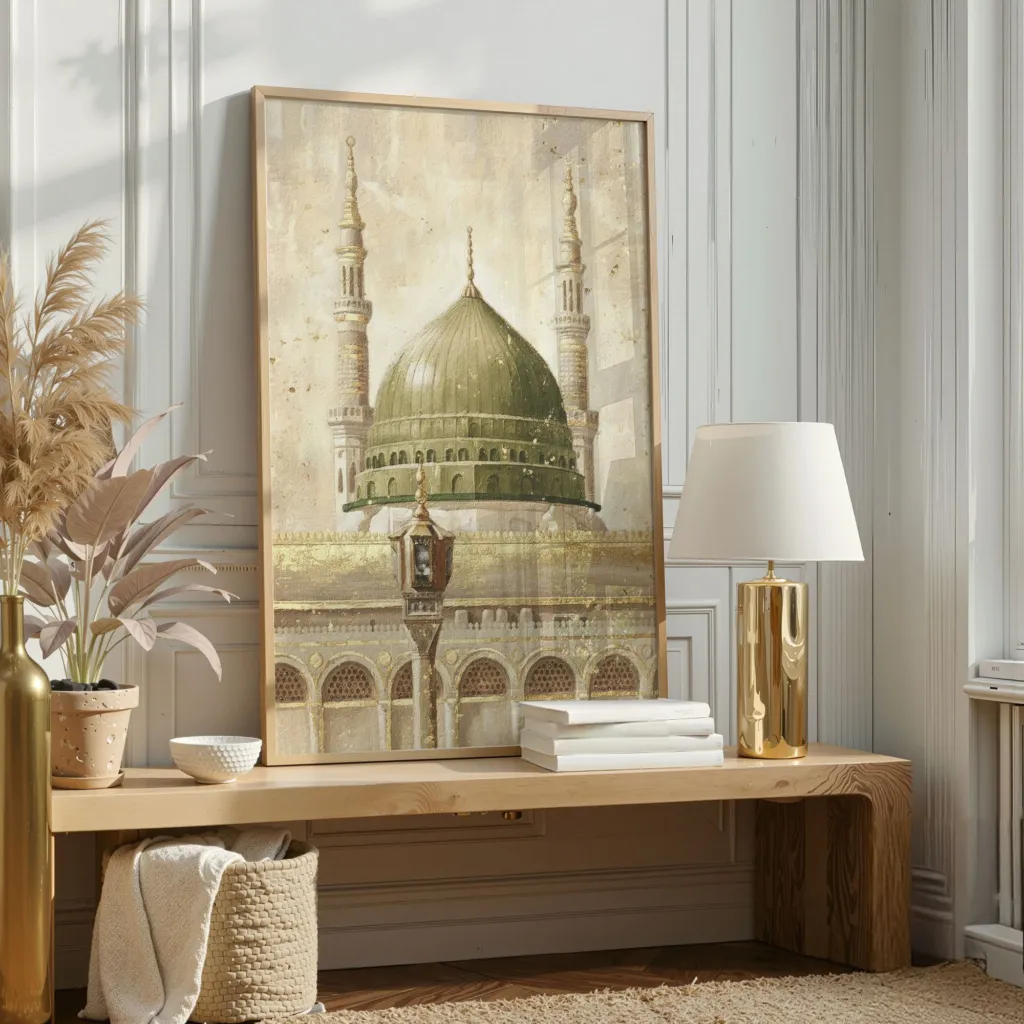
Choose the wall people see first when they sit down, usually above the sofa or a sideboard, and give it one strong piece: a Quran verse, the 99 Names of Allah or a painting of Masjid an-Nabawi. A single large piece looks calmer than lots of small decorations, and it stays meaningful after Eid. Surah Al Fatiha and Ayatul Kursi are the most popular choices for Ramadan because they are recited so often during the month.
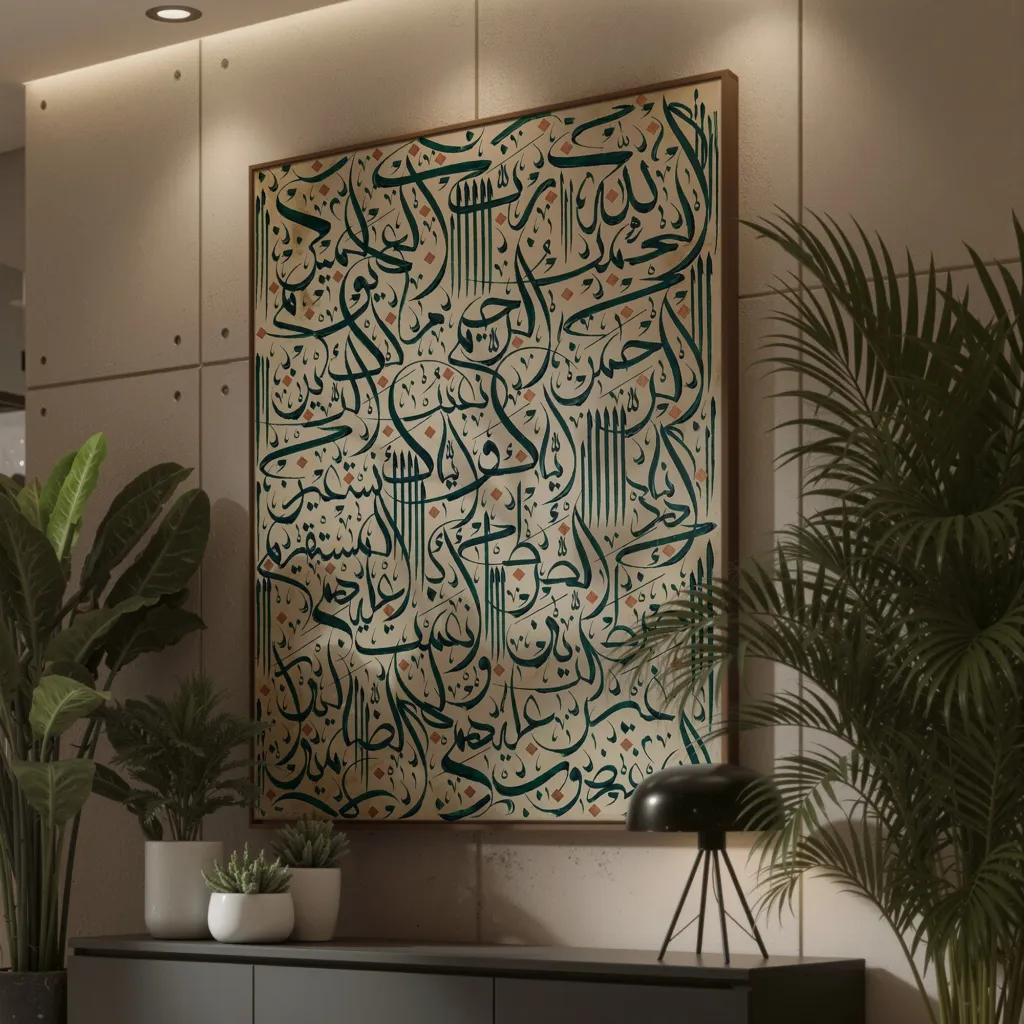
2. Swap bright lights for warm string lights
Warm white string lights (2700K or lower) along a window, a bookshelf or the top of a curtain rail change the feel of a room in minutes. Put them on a timer so they come on at Maghrib. It quietly marks the time for iftar.
3. Add lanterns
The Ramadan lantern, or fanous, comes from Egypt and is now used everywhere. Group two or three lanterns of different heights on a side table or the floor beside the sofa. LED candles are safer around children and curtains.
4. Use crescent and star shapes sparingly
A crescent moon light or a garland of stars is a lovely touch, but one or two are enough. Too many shapes can make a room look like a party rather than a place to pray and read.
5. Bring in textiles
Cushion covers in deep green, navy, gold or terracotta, a throw over the armchair, and a runner on the coffee table are an easy way to change the mood without buying furniture.
Entryway decorations that welcome guests
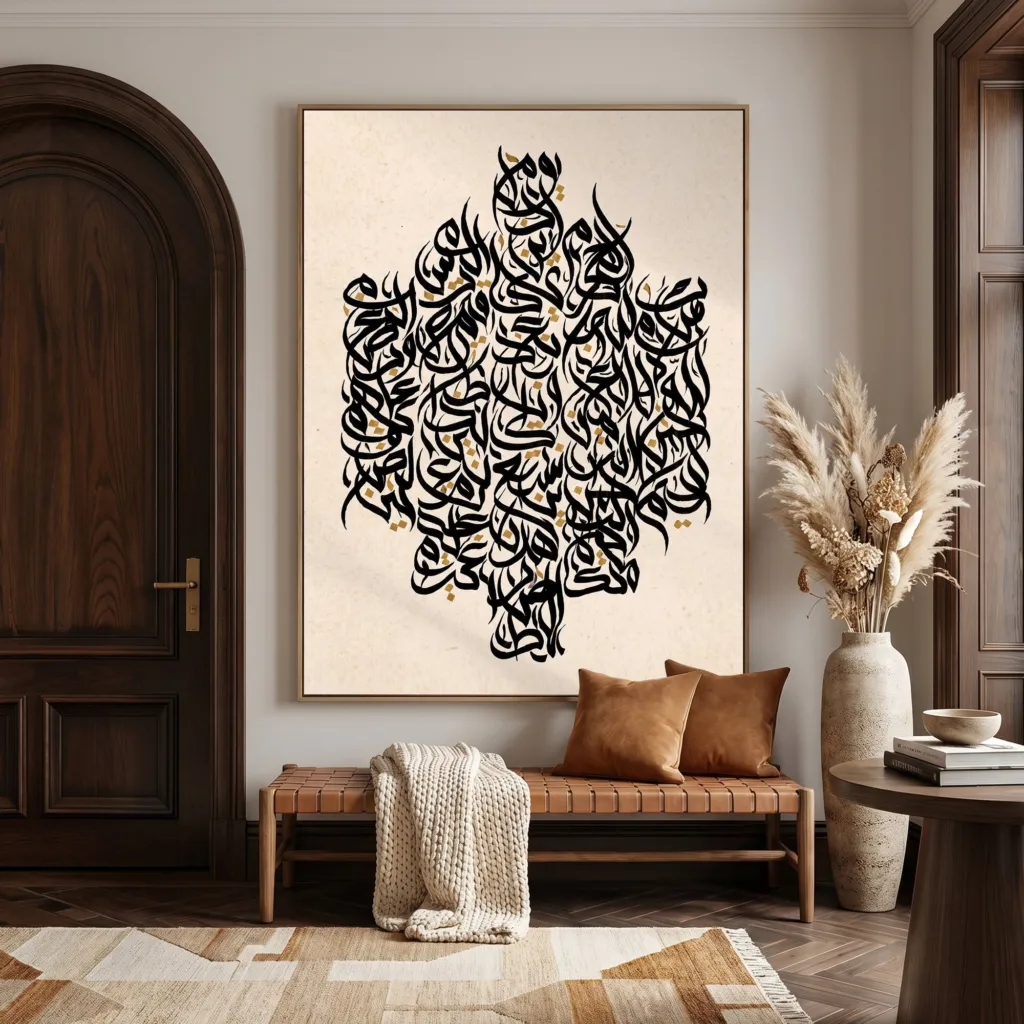
6. Greet guests with a verse or a short phrase
Ramadan is a month of guests and iftar invitations, so the entryway matters. A Bismillah, Surah Al Fatiha or a Masha Allah piece above a console or bench sets the tone as people walk in.
7. A tray of dates by the door
A small bowl of dates and a few bottles of water by the door are practical for anyone breaking their fast on the way home, and they look welcoming.
8. A Ramadan Mubarak sign or wreath
A simple wreath or wooden sign on the front door tells neighbors something special is happening. It is also a gentle way to start conversations with non-Muslim neighbors.
A prayer and Quran corner
9. Set aside one quiet corner
Many families set up a dedicated space for the month: a prayer mat, a Quran on a stand, a soft lamp and a basket for prayer clothes. Put it in the calmest part of the home, away from the TV.
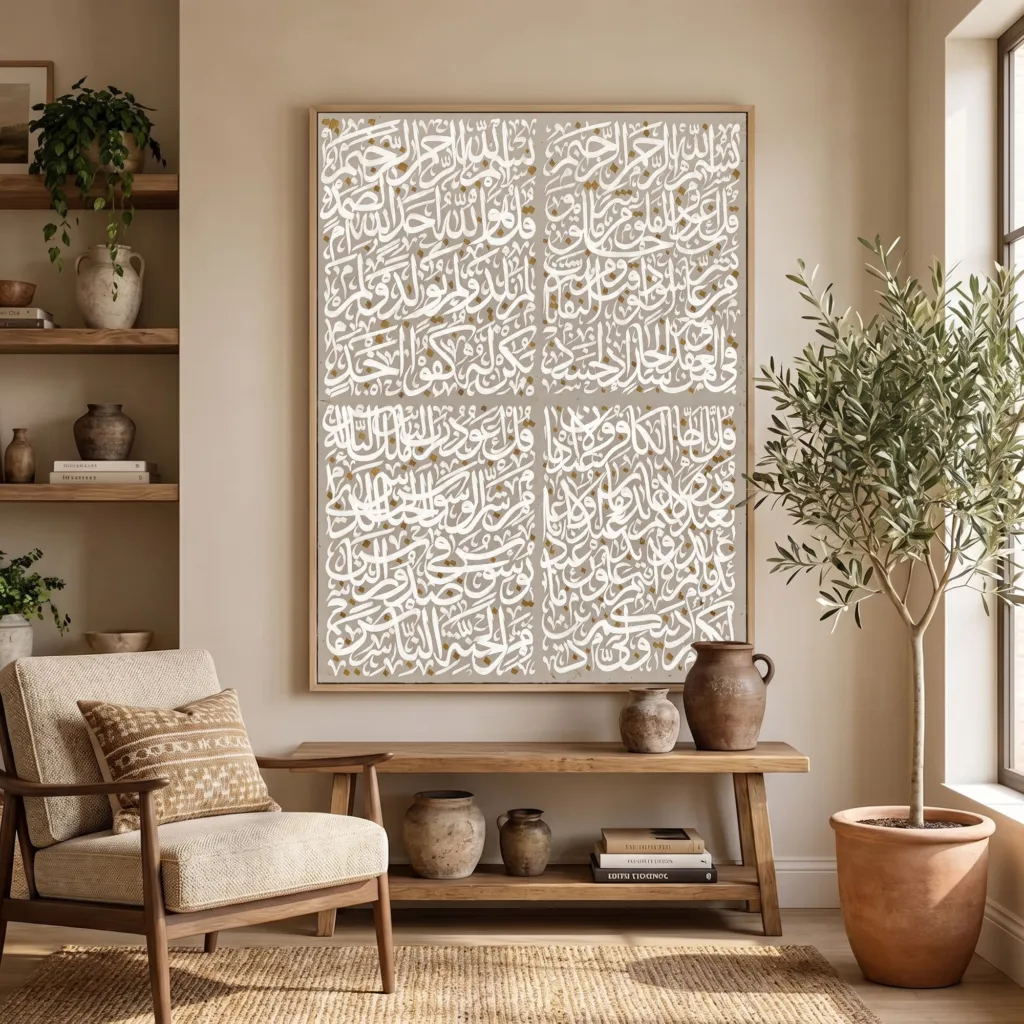
10. Hang something to reflect on
A verse above the prayer corner gives the eyes somewhere to rest before and after salah. The Four Quls, Surah Al Ikhlas or a single word like Sabr (patience) work well in a small space.
11. Keep a Quran reading tracker
A printed chart with 30 boxes, one juz a day, sits nicely in a frame on the shelf. Children love ticking off their own simpler version.
Iftar table decorations
12. Dress the table, not the whole room
A runner, a few lanterns or candles down the middle, dates in a nice bowl and the good glasses are enough. Keep the center low so people can see each other.
13. Make a dessert or dates station
A side table with dates, sweets, tea and coffee keeps the main table clear and gives guests somewhere to gather after Maghrib.
Ramadan decorations for kids
14. A countdown or good deeds calendar
Thirty pockets or envelopes with a small treat, a dua to learn or a good deed for the day keeps children excited all month. Hang it low where they can reach it.
15. Crafts you make together
Paper lanterns, crescent moons cut from card, and a banner with each child’s name are easy weekend projects. They do not need to be perfect. What matters is that the children made them.
Which decorations should stay up after Ramadan?
Lights, banners and crafts usually come down after Eid. A framed verse, a calligraphy piece and the Quran corner are worth keeping, because they carry the feeling of Ramadan into the rest of the year. If you only buy one thing this year, make it something you will still want to see in July.
If you are choosing a piece for the wall, our guide to choosing Islamic wall art explains sizes and placement room by room, and the Ayatul Kursi guide covers what the verse means and where families usually hang it. Ordering a gift for Eid? See our Eid gift ideas.
Every Flizions piece is printed to order in the US. Most orders arrive 7 to 9 days after ordering with free shipping, so order by about January 20 to have your wall art up before Ramadan starts.
Frequently asked questions
When should I put up Ramadan decorations?
Most families decorate in the last week of Sha'ban, a few days before Ramadan starts. Ramadan 2027 is expected to begin on February 7 or 8, depending on the moon sighting, so the weekend of January 30 to 31 is a good time to set up.
What are traditional Ramadan decorations?
The most traditional pieces are lanterns (the fanous, which comes from Egypt), crescent moon and star shapes, warm string lights, and Quran verses or Arabic calligraphy on the walls. Many homes also set out dates, a prayer space and a Ramadan calendar for children.
Can Ramadan decorations stay up all year?
Lights, banners and paper crafts usually come down after Eid. Framed Quran verses, Arabic calligraphy and a reading corner work all year, which is why many families buy one lasting piece each Ramadan instead of more seasonal decor.
How can I decorate for Ramadan on a small budget?
Start with warm string lights, a few candles or LED lanterns, a tray of dates by the door, and one meaningful focal point such as a Quran verse print. Paper lanterns and crescent cutouts made with children cost almost nothing.
Is it okay to decorate the house for Ramadan?
Yes. Decorating is a cultural custom, not a religious requirement, and most scholars see no problem with it as long as it does not become wasteful or distract from fasting, prayer and charity. Many families find it helps children feel the month is special.